You Need a Monastery, Not a Meditation Retreat
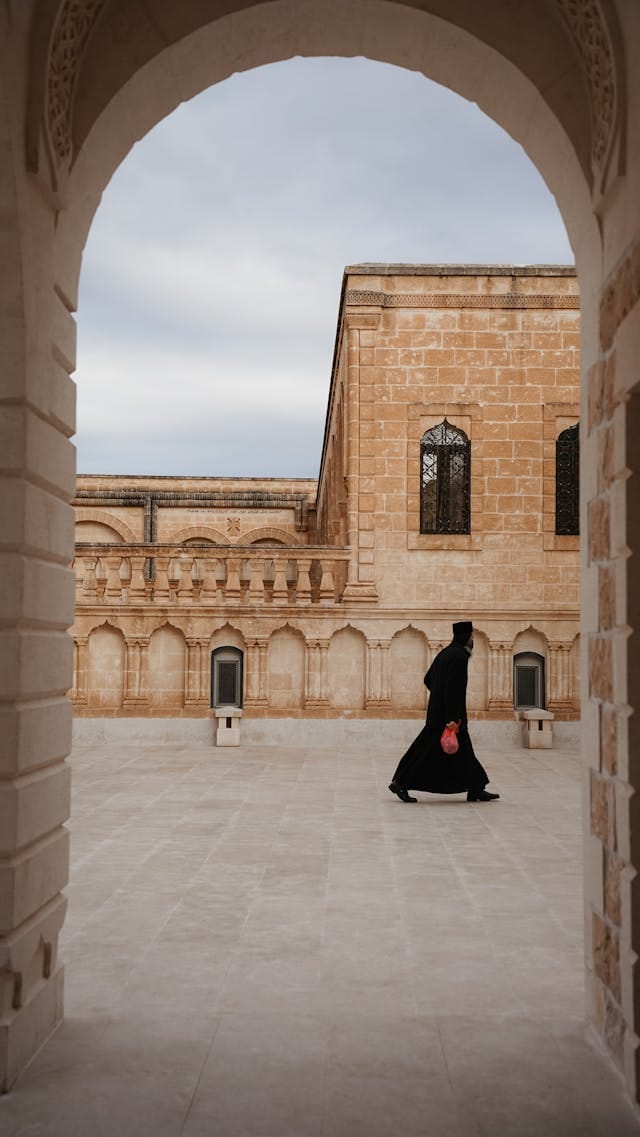
In 2015, I went on a Vipassana meditation retreat in Saskatchewan.
I spent ten days in silence, deep in meditation.
It was a challenging ordeal, and it forced me to look inwards.
And yet, it’s nothing compared what I’ve found in Orthodoxy.
My interest in meditation started in the 2010s. I wasn’t a practicing Christian at the time, but I was brought up in the Dutch Reformed Church.
While living in Toronto, I stepped back from my faith. I wasn’t sure what to believe. I didn’t care. I was living a secular life.
I was in the midst of a self-improvement kick - working out, reading books, adapting healthier eating habits.
It was during this time, where I looked into how I could push the limits of my mind, body, and spirit.
This drew me towards a spiritual way of thinking. It wasn’t focused on God, so much as general spirituality, the universe, energy, frequency, and vibration - real new-age hippie stuff.
I was reading books like Conversations With God, The Alchemist, The Four Agreements, and The Celestine Prophecy.
I browsed sites like HighExistence while listening to Joe Rogan podcasts, and talks from Terence McKenna, Ralph Smart, Alan Watts, and Carl Sagan.
I heard about Vipassana meditation retreats. It sounded like a challenging experience, but I didn’t have time, plus the retreats in Ontario were always full.
When I decided to quit my job, leave Toronto, and move to Calgary, I found an opportunity.
I looked at available options, saw an upcoming retreat, and signed up.
Just after arriving in Calgary, I headed off to the retreat.
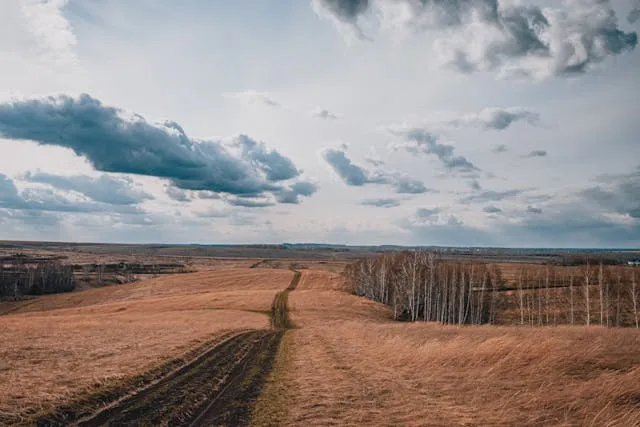
It was hosted in rural Saskatchewan. There was nothing around. The building used to be a retirement home. Part of the yard was roped off.
I went inside, got checked in, and put my things in my room. It was a small room with a single bed. Pretty basic, but that’s what I signed up for.
I went downstairs to meet the other students. There were maybe 40 or 50 people total, and some of us got talking over a small meal.
There wasn’t much time to get to know anyone, because shortly after eating, we had our first meditation session.
We were given a brief introduction and met the assistant teacher who would be overseeing the meditation practices for everyone during our stay.
For the next ten days, the rules were going to be:
- No talking, although short discussions with assistant teacher were allowed.
- No communication with other students - verbal or non verbal. No head nods, pointing, gestures, or anything of the sort. Not even eye contact.
- Men and women are kept in separate living facilities, meditate on different sides of the meditation hall, eat at different sides of the cafeteria, and are to have no interaction with one another.
- No killing. This means a vegetarian diet, and if a mosquito lands on you, brush him off rather than smacking them.
- No external stimulation - books, writing, screens, and all other distractions are off limits. Exercise is also forbidden, except for walking in the roped off areas of the yard.
- No stealing, lying, sexual activity, or intoxicating substances.
- No mixing techniques. You are to practice the meditation as it is taught, and not combine other meditation styles, visualizations, mantras, prayers, or anything else.
As an Orthodox Christian looking back at this time, it’s the last rule I take issue with. During the course, we were to put aside any religious practices in order to focus on the Vipassana techniques.
Part of me understands it. If you don’t fully understand the techniques, and you start mixing them with your existing beliefs, the results will be different.
They want you to have a pure understanding of their meditation. You aren’t being asked to give up your faith, just put it aside for ten days while you meditate.
I now find this practice completely unacceptable. When I joined the Church, I agreed to have a rule of prayer in my life.
That means I pray to God every day - no matter what.
This isn’t a prayer suggestion. It’s a rule.
And this rule supersedes anything Goenka and the Vipassana course tells me to do.
However, at the time, I had no faith or religion to betray. I was deep into new-age practices and studies, so I agreed to their terms.
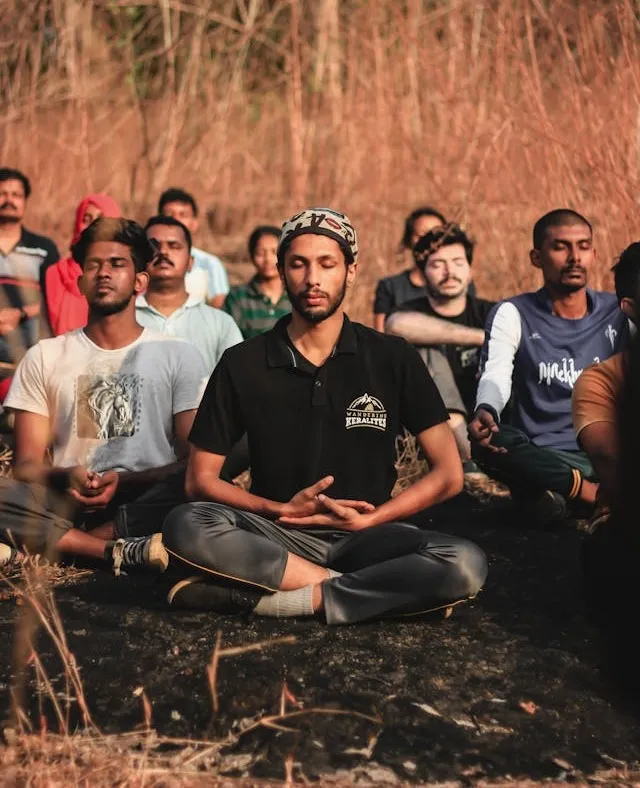
For the next ten days, I would be deeply meditating.
A typical day looked like this:
4:00 a.m. – Wake-up bell
You get up in the dark, clean up, and head to the meditation hall.
4:30–6:30 a.m. – Meditation
Either in the hall or in your room. Silent, seated practice. I often fell back asleep during this time.
6:30–8:00 a.m. – Breakfast break
Simple vegetarian food. You eat in silence, then walk, wash, or rest.
8:00–9:00 a.m. – Group meditation
9:00–11:00 a.m. – Meditation
In hall or room
11:00 a.m.–12:00 p.m. – Lunch
12:00–1:00 p.m. – Rest / interviews
You can speak briefly with the Assistant Teacher if you have questions about the technique. Otherwise, you rest.
1:00–2:30 p.m. – Meditation
2:30–3:30 p.m. – Group meditation
3:30–5:00 p.m. – Meditation
5:00–6:00 p.m. – Tea break
6:00–7:00 p.m. – Group meditation
7:00–8:15 p.m. – Evening discourse
A recorded talk by S. N. Goenka explaining the theory, psychology, and philosophy behind what you’re experiencing.
8:15–9:00 p.m. – Final meditation
9:00–9:30 p.m. – Questions / wind-down
9:30 p.m. – Lights out
This schedule amounts to 10-11 hours of meditation every single day.
The technique is simple.
During the first few days, we sit with our eyes closed and observe the sensation of air passing by our upper lip just below the nose as we breathe.
As the days progressed, we expanded our area of awareness to scanning the surface of our body.
By the end of the ten days, we were scanning our entire body top to bottom, inside and out.
During this entire process, we do not verbalize or visualize anything in our mind.
We only monitor the sensation of our body.
Any thoughts that came into our mind during this time were to be passively observed, and then released - like a movie playing on a television in the corner of the room.
This was slightly different from the way I meditated before taking the course.
Like in Vipassana, I would do my best to quiet my mind. No visualization or verbalization. Any thoughts I had were treated passively without engagement.
However, I didn’t scan my body or focus on any particular sensation. Sometimes, I would focus on my breathing.
People often describe meditation as “emptying the mind”.
I don’t see it that way, and have never heard it described like that by people who actually meditate.
Instead of emptying the mind, I think of it as calming the mind.
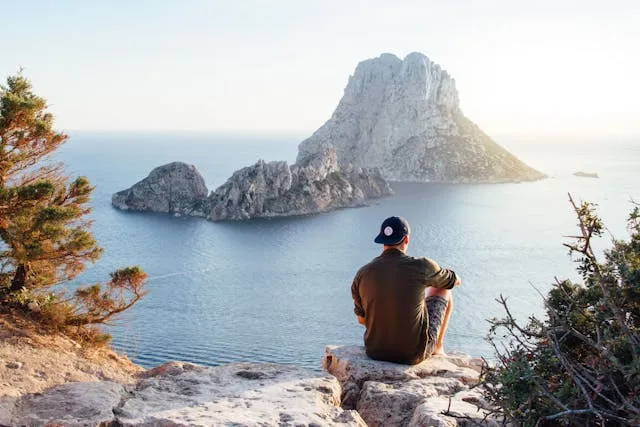
Think of the mind like a body of water. Your thoughts flow. There are waves and ripples. A body of water is almost always in motion. It can get hectic, or even violent at times. Meditation works to calm the waters of your mind.
In a recent conversation with my priest, I brought up meditation. I’ve been wanting to get back into it, but I didn’t want to break with Orthodox tradition.
When I described my personal methods, he said that they were in line with what many of the saints had prescribed in the past.
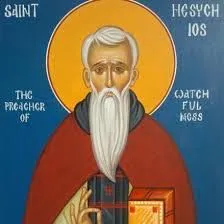
St. Hesychios the Priest writes:
“Sit in silence, collect your mind, and observe the thoughts that come. Do not converse with them. Let them pass by like clouds.”
So the methods that I used, as well as the methods taught in Vipassana are compatible with Christianity and Orthodoxy.
The problem comes from the environment one enters when they sign up for a Vipassana retreat.
In fact, my priest compared the dangers of Vipassana to those of Freemasonry.
I’ve never been a Freemason, but I did go through a period where I looked into it and considered becoming a member.
The main similarities between the two, which Christianity disapproves of are:
- Both require entering a closed system with strict internal rules
- Both ask you to temporarily suspend other spiritual frameworks
- Both operate inside a self-contained ritual environment
- Both claim to be “universal” rather than explicitly religious
- Both emphasize inner transformation through a defined method
- Both rely on an initiatory experience that only insiders fully understand
Christianity does not operate like this. Our lives are oriented towards God. Even aesthetic practices like fasting, silence, mindfulness, repentance, and communion all have God at the forefront.
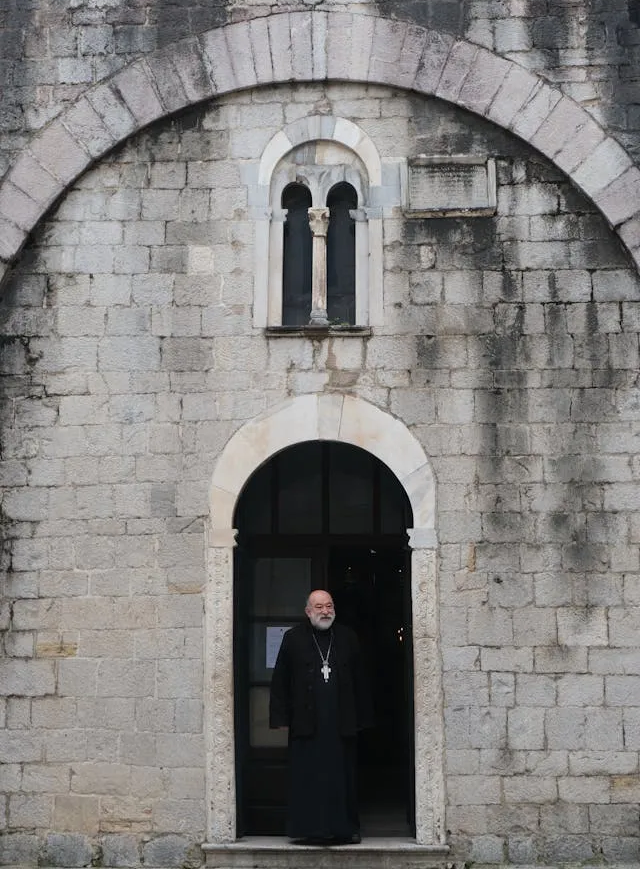
My priest pointed out that everything I was seeking from my Vipassana meditation retreat can be obtained by staying in a monastery.
I visited a monastery once when I was an inquirer, but never spent any extended time there. However, I know a couple of people who have, and when I thought about it, this made sense.
You also wake up early to serve the divine liturgy.
You also eat simple meals which are mostly vegetarian.
You spend countless hours engaged in prayer and silence.
You follow the rules and guidance of those more experienced than you.
The structure and practices are very similar and they are all directed towards the glorification of God.
Here are some of the things I learned and experienced during the Vipassana retreat, and how some of them relate to the monastic life.
- During the retreat, you have no stimulation coming in.
You’re sitting in silence with your eyes closed for over ten hours a day.
With nothing new for your brain to process, it starts going through your mental archives trying to make sense of things that happened in your past. - There were at least two nights where I experienced intense dreams.
One of them remains the most vivid dream I’ve ever had. Elements of this dream came true in my real life. - The hardest part of Vipassana meditation was having to sit upright for hours at a time.
Laying down wasn’t an option, because it leads to a room full of sleeping people.
They gave us all the cushions we wanted, and it still wasn’t enough.
By the end of the week, I was starting to adapt, but there was a lot of shoulder and lower back pain. - Communication between students wasn’t permitted, but none of us wanted to come across as rude.
It felt strange to be around everyone, but never engaging in any way.
We held doors open for each other and that was about it. - I came to realize why the sexes are separated from each other.
I attended this retreat when I was deep into hookup culture, and often thought about sex, but during this time, my desire was quelled - right up until it wasn’t.
Roughly seven days into the course, I was in the main hall. The women are on one side, men on the other. I had gone up to ask the assistant teacher something.
On the way back to my seat, I passed by an attractive woman around my age. There was a brief moment of eye contact and we exchanged a friendly smile.
From there on, I couldn’t get that incident out of my head for an abnormally long time. It felt weird, given how mundane this interaction was.
It illustrated just how much of a role sex and women played in my life. All it took was a glance, and my entire week of meditation was thrown into chaos.
Now, it makes sense why a lot of monasteries are single gender, and why women aren’t permitted to visit Mount Athos. - A few participants took off in the middle of the night.
An older student told us we would question our motivations for being there and wonder if it was really worth it.
I didn’t feel the urge to leave. I had committed to staying the full ten days and viewed the experience as a personal challenge. - I heard many stories of people who went to Vipassana, and ended up quitting vices: drinking, drugs, smoking, and other self sabotaging behavior.
I was a stoner when I went. I wondered if this course would convince me to give up weed.
It didn’t.
I couldn’t wait to get home after the retreat so I could get high. - The biggest difference I noticed while practicing meditation, was that my level of patience skyrocketed.
The more I meditated, the less fazed I became when I was delayed somewhere, stuck in traffic, or in a long lineup. - With the Vipassana body-scanning technique, I found that there were some areas where it was more difficult to scan.
By focusing attention on that area, I could overcome that resistance, and the area started to feel better.
On the last day of the retreat when we were finally allowed to talk, one man in our group immediately told us that he struggled with back pain most of his life, and this past week had healed most of that pain. - Eight days into the retreat, I became overcome with anger.
There were two incidents playing in my head on repeat.
One had taken place a week before going to the retreat, the other happened when I was thirteen.
I had to sit in silence, then pace the outdoor walking path, carrying the most furious anger I had ever felt, with no way to speak it, release it, or even name it aloud.
When I mentioned this to my priest, he said that in a monastery, I would have brought it to confession, and then repented from it.
In my situation, the fire was left to burn. - I thought it would be difficult to stay silent the full ten days, but it wasn’t too bad. In fact, it was a nice break.
That said, once I started talking again, my vocal chords strained easily.
While silence isn’t mandatory in a monastery, my priest found it a little more difficult.
He can be talkative, but when he engaged with the monks living there, he was often told “Less talking, more prayer.”
Overall, I enjoyed my experience with the Vipassana retreat. It was memorable, and I made some friends I still keep in touch with.
However, the meditation techniques didn’t stick.
Once you’re finished the course, they advise you to practice meditating for two hours every day - one hour in the morning and one in the evening.
I don’t know anybody with that kind of time.
I don’t think I lasted 3 weeks, and I didn’t even have a job.
In contrast with Orthodox Christianity, my rule of prayer has been kept mostly unbroken for years.
Thankfully, it doesn’t require two hours a day.
I tend to pray a quick prayer in the morning, as I’m usually up late and rushing to work. In the evening before bedtime, I make a more in-depth prayer.
They say that prayer is when you talk to God, and meditation is when you listen for a response.
That can be true, but you must be attuned to that frequency, otherwise you’re just getting noise, or deceiving yourself.
Orthodox monks work day and night to tune themselves to God’s message. Vipassana deliberately cuts itself off from it.
Meditation retreats and Orthodox monasticism both do a great job of removing stimulation, forcing stillness, breaking habits, and humbling our body and mind.
The difference is that Vipassana tells us to set everything aside, while the Church tells us there is nothing above God.
Vipassana techniques work. Meditation works. The question is not whether they work, but what they are working toward.
Without proper guidance, you are left alone to deal with whatever rises to the surface.
In the Church, that same inner turmoil is met with repentance, healing, and grace.
If you ever feel the need to step away from the world, be silent, strip life down to the basics, and confront yourself, don’t waste that impulse on a meditation retreat.
Go to a monastery.
You’ll find the same stillness.
But now, it leads somewhere.
If you enjoyed this article, bookmark this page and remember to Subscribe.
If you’d like personalized guidance on training, consistency, and building a sustainable routine, I offer 1-on-1 coaching. Feel free to reach out.
Check out my Substack:
And follow me on socials:
Facebook
Twitter
Instagram
Youtube
Thanks for reading.
God Bless.
Member discussion