The Core of the Issue
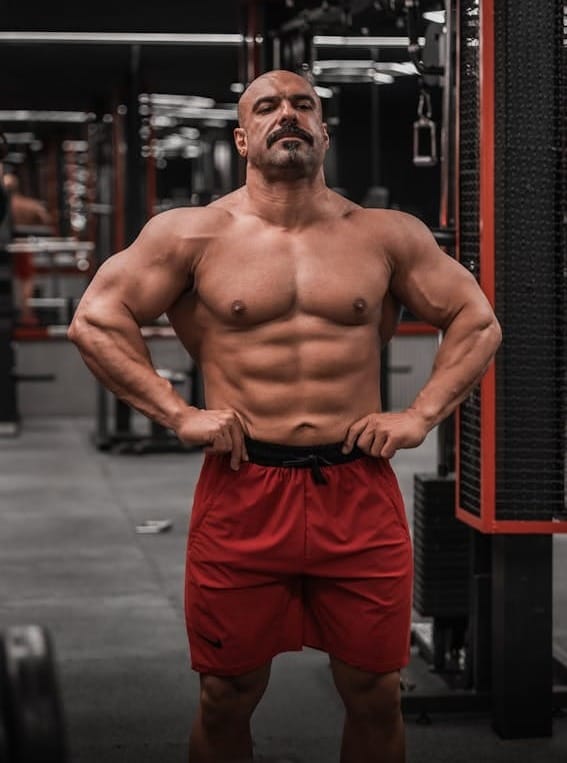
This is the sixth article in a series where I break down the best exercises for each muscle group.
These articles are to help beginners get the most out of their workouts. You’ll learn which exercises to do, how to structure them, and the correct form to use.
Today, we’re covering core exercises.
Abs vs Core: What’s the difference?
When you think about training your core, most of us think about exercises that target our abs. We’re thinking about doing crunches, leg raises, and working on that six-pack.
While these are all core exercises, our core contains more than just the abdominals. The entirety of your core contains:
- Abdominals
- Lower Back
- Hips and Pelvis
- Diaphragm
You can have six-pack abs with a weak core. You can also have a strong core without visible abs.

What are the benefits of training core?
If you train abs, without training the rest of your core, the benefits include:
- Spinal Flexion Strength
- Visible Ab Muscles (Hypertrophy)
- Endurance when in flexed positions
However, by training your entire core, you not only get those benefits, but also:
- Transfer Force - Your limbs generate power. The core transfers it. This translates to better performance in all kinds of lifts, throws, punches, sprinting, and grappling.
- Spinal Protection - A strong core helps to brace your spine under pressure. This reduces your risk of injury and allows you to safely lift heavier weights. This is especially important as we get older.
- Improved Posture and Balance - Training your core reduces excessive anterior pelvic tilt. Your pelvis has more stability, and the mechanics of standing, walking, and running improve.
- Improved Athletic Performance - You have greater rotational strength, and anti-rotational strength. Athletes don’t train their core for six-pack abs. They train their core for better performance.
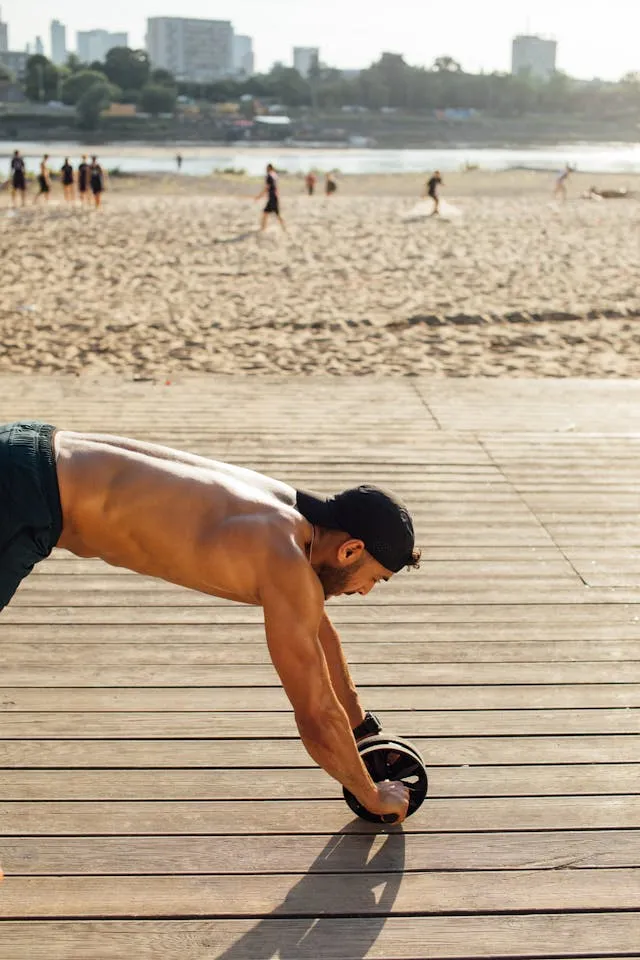
How Do I Train Core?
A lot of bodybuilders, powerlifters, and other athletes work so hard training other muscle groups, that they neglect their core. They might hammer out some half-assed crunches at the end of their workout, if they even get that far.
Other people, especially beginners, do lots of core exercises. There are many to choose from. They’re fairly easy to perform. They wear you out quickly.
If you don’t have a proper workout plan in place, it’s a good way to distract yourself.
I’m not going to lie. Training my core has been a challenge.
When I was into yoga, I did a lot of core work. When I started weightlifting and bodybuilding, I had a plan that included core exercises. I did them early on, but they gradually slipped from my routine.
There’s a professional bodybuilder at my gym, who was saying that he has one day a week where he only trains core and abs. I like that idea, but it’s not always practical.
I think the best way to get a strong core is to train it every workout. I would normally pick one or two exercises and do three sets until failure. Sometimes I follow a YouTube video or workout plan.
The good thing about training abs is that you don’t need any weights or machines for a solid workout. They exist, and you can use them, but they’re not necessary.
A few tips on training core:
- Don’t just do crunches. These only target one part of your core. Mix up your exercises for a better-rounded workout.
- Treat core training as just that - training. Don’t just use it as a burnout/finisher for your workout.
- Don’t over-train abs. You won’t get that six-pack any sooner. When it comes to frequency, I suggest doing one or two exercises each workout. It only takes 5-10 minutes to get an effective core workout.
- Aim for control. The burn may feel like it’s working, but having control over your core movements shows real strength.
- Remember to breathe throughout the exercises.
Which Exercises Should I Do?
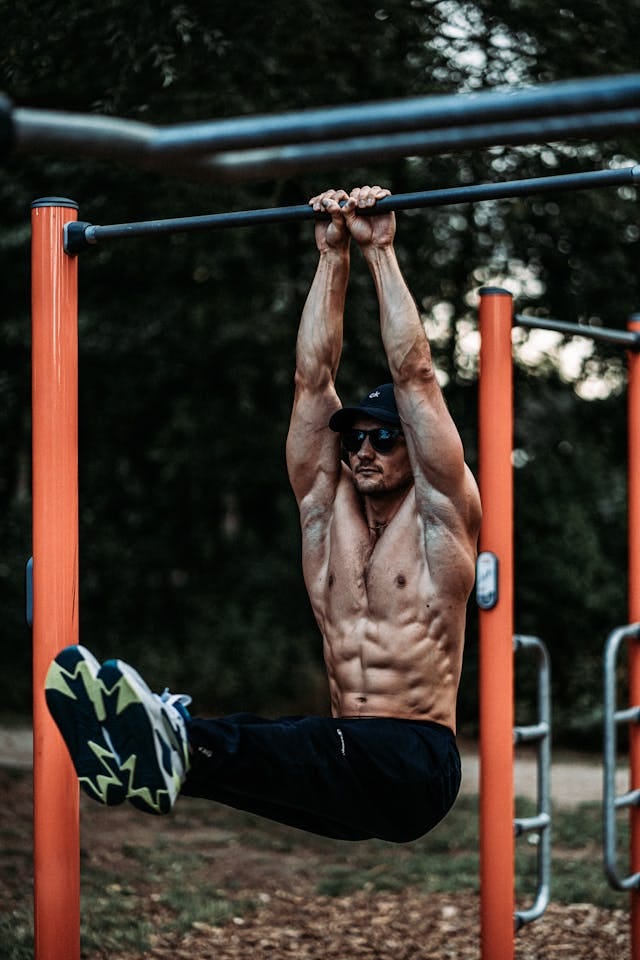
Leg Raises / Knee Raises - This is one of the most effective exercises for targeting the core. However, it’s very difficult for beginners. Simply hang from a pull-up bar, and raise your legs in a controlled manner.
If leg raises are too difficult, there are also knee raises, where you hang from the bar, and bring your knees to your chest. Both target your core and challenge your grip strength.
If hanging from the bar is too difficult, the exercise can be modified.
Lay on the ground with your legs stretched out. Raise your legs up towards the sky, keeping your legs straight. At the top of the movement, your bum and lower back should be off the floor. You should feel it in your core. Keep your arms at your side to help with bracing and balance.
Some people like to kip-up at the top of the movement for extra work. If you’re just starting out, focus on controlling the movement before adding anything extra.
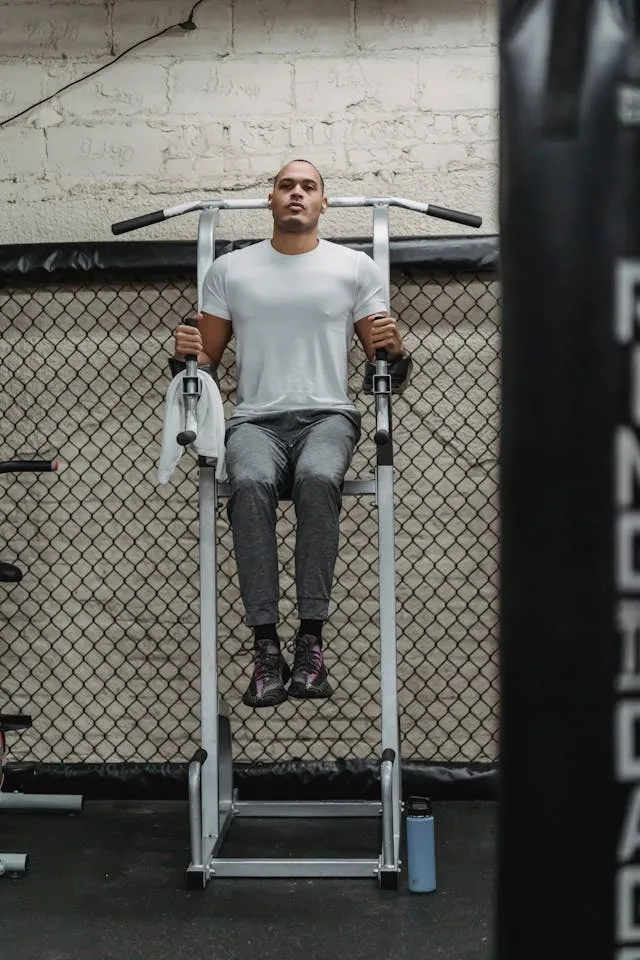
Captain’s Chairs - This is another variation of leg raises and knee raises.
The captain’s chair has a back and armrests, but no seat.
When you’re the captain, there is no rest.
I prefer the captain’s chair to hanging from a bar. It’s more comfortable and I can target my core without wearing out my hands gripping the bar.
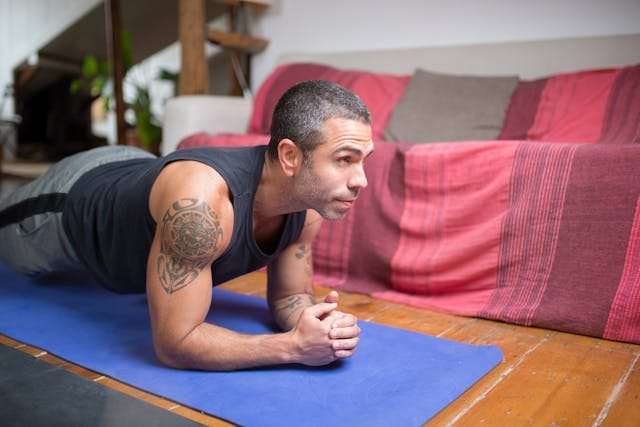
Planks - This is a classic core exercise. All you need is the floor.
Simply get into the top part of a push-up position and hold.
It seems easy enough, but try holding it for one minute straight. You’ll be feeling the burn in your core.
I’m also a big fan of dolphin planks, where instead of holding your arms straight balancing on your hands, you balance on your forearms, usually with your hands closer together and your elbows directly under your shoulders.
Decline Sit-Ups - This is a great core exercise that emphasizes hip flexion and lower ab involvement. It’s more effective than doing regular sit-ups, but also more challenging.
You need a decline bench where you can hook your feet in for support.
If you want additional challenge, grab a weight plate. You can place it on your chest or hold it out in front of you for additional ab work.
Russian Twists - Any exercise that contains an Eastern European country in its name is going to be brutal, and Russian Twists are no exception.
They improve rotational strength, and target your obliques.
Be careful to focus on control, and don’t use too heavy of a weight to avoid back pain.
Cable Crunches - Adding weight to your core workout is an excellent way to accelerate muscle growth. It’s easy to progressively overload and control the range of motion.
Farmers Carries - We mentioned this in the previous article as a forearm exercise, but it’s also one of the best core exercises.
You can also do suitcase carries, which are one-handed farmer’s carries that do more to activate your obliques and stabilizer muscles.
Ab Machines - For most muscle groups, I’m against using the machines in the gym.
However, I’m mixed when it comes to using the different ab machines at the gym when training core. Some are good, others aren’t.
I find the ones that simulate weighted crunches work better than ones that use twisting motions. If it works for you, I say go for it.
But What About Six-Pack Abs?
Here’s the truth about visible abs. They aren’t going to magically appear just because you’re training your core regularly.
Visible abs come from having a low body fat percentage.
In fact, there’s a saying:
Abs are made in the kitchen - NOT the gym.
If your goal is to get that six-pack, you’re going to need to focus on nutrition just as much as you do on fitness.
They take months of discipline and sacrifice to develop, and just days to lose all your progress.
A personal trainer at my gym, who also competes, was telling me about six-pack abs for physique competitions.
It required a strict diet, fasted cardio in the morning, daily weight training, and another cardio session later in the day, not to mention lots of rest and recovery.
It took him two to three months of focused effort to develop, and less than two weeks to lose it all.
Some people are blessed genetically or have lower body fat, which allows them to develop abs easier than most of us.
I’m not discouraging anyone if it’s your goal to have a six-pack, but I want to be honest and realistic about your expectations. They aren’t going to show up, just because you started doing leg raises four days a week.
It’s more than doable to get a six-pack, and even to carry it year-round, but it doesn’t happen by accident. It requires discipline and consistency.
Training your core doesn’t need to be complicated, and it doesn’t need to dominate your workouts. A strong core is built through consistent, controlled work over time, not endless crunches or marathon ab sessions.
If you focus on control, breathing, and proper movement, even a few minutes of core training per workout will pay off. You’ll move better, lift safer, and perform better across the board.
Visible abs may or may not come depending on your diet and genetics, but a strong core is something everyone can build. Prioritize strength and stability first, and the aesthetics will take care of themselves.
In the next article, I’ll show you how to take everything we’ve covered so far and put it together into a simple, effective workout plan you can actually stick to.
If you enjoyed this article, bookmark this page and remember to Subscribe.
Check out my Substack:
And follow me on socials:
Facebook
Twitter
Instagram
Youtube
Thanks for reading.
God Bless.
Member discussion