Putting It All Together

This is the conclusion to the exercise article series written over the past few weeks. It’s where everything comes together into something you can actually follow.
If you haven’t read the previous articles, check them out here:
Part 1: Chest
Part 2: Back
Part 3: Legs
Part 4: Shoulders
Part 5: Arms
Part 6: Core
These articles will provide you with the foundational knowledge for every major muscle group you’ll be exercising throughout the week.
Now we’re going to be pulling everything together into a cohesive weekly program that works for you.
What’s the best workout program for me?
Good question.
You need to ask yourself TWO things:
- What type of results are you looking for?
- Lose Weight
- Better Health
- Look Good Naked
- Increase Strength
- Better Athletic Performance
Whatever your goal is, you need a program that can get you there.
Someone looking to maintain a baseline level of health doesn’t need the same program as someone trying win a bodybuilding competition or lose a significant amount of weight.
Make sure that the workout you choose is going to work for you.
I’m providing multiple sample workout programs throughout these articles, and there are plenty more available online.
- How much time do you have?
How many days out of the week are you going to workout?
Three days? Four? How about six?
How long are your workout sessions going to be?
30 minutes? One hour? Two hours?
Be realistic.
You may think you can go six days, but if you’re only making it 2 or 3, then your program isn’t working for you.
Don’t get me wrong. Working out one day of the week for 30 minutes is better than nothing, but you’re deluding yourself if you think you’re going to make any significant progress.
The best workout program is going to be one you can do consistently week after week.
This is also true when it comes to choosing the exercises you’re going to perform. If there’s something you absolutely hate and dread every time you approach it - drop it and choose something else.
Two exercises that I’ve dropped are deadlifts and lunges. I know they’re beneficial, but I hate them, so I stopped doing them. Instead, I perform squats and other leg exercises.
Choose exercises that you know will give you the most bang for your workout. My previous articles have listed the most commonly known beneficial exercises you can structure your workout around. You can then add the exercises you enjoy.

Types of Weekly Programs
The way I’m going to describe these programs is set up for the average guy looking to get healthy, lose weight and put on muscle.
For people training strength, it helps to lower the number of sets and reps. You want higher intensity at a low volume.
For people going the bodybuilding route, who want to put on visible muscle, more sets and reps will give you what you need.
Full Body Workout
Good for people who
- Have irregular training schedules
- Train less than 3 days per week
- Want to add an additional day to their workout
This concept does exactly what it says it does. You train all muscle groups in one workout.
Hitting the big 3 lifts is a great start if you’re working with limited time.
For example:
Deadlifts - 3 x 6
Squats - 5 x 8
Bench Press - 5 x 8
If you have more time, I would start adding one or more exercises from the following:
Pull-ups - 3 to 5 sets to failure
Dips - 3 to 5 sets to failure
Military Press - 5 x 8
If you still have time, I would keep picking my favorite exercises and adding those.
Keep in mind that this isn’t a suitable everyday workout for most people. This is a demanding workout geared towards those with limited days to train.
You want to give your muscles time to rest.
Upper / Lower
Upper body exercises one day, lower body another. This gives each half of your body time to rest between workouts.
Perfect for people who
- Have an even number of days to train
- Crave simplicity in their workouts
I think the best thing about an upper / lower split is its emphasis on leg training. It’s easy to get caught up with upper body exercises and neglect our lower half. This workout split gives our leg muscles the attention they deserve.
A sample upper / lower body workout plan:
Upper Body - Monday / Thursday
Pull-ups - 3 sets to failure
Bench Press - 4 x 8
Military Press - 4 x 8
Tricep Pushdowns - 4 x 12
Barbell Curls - 5 x 8
Lower Body - Tuesday / Friday
Squats - 5 x 8
Leg Extension - 5 x 12
Seated Leg Curl - 5 x 12
Calf Raises - 5 x 12
Rest Days - Wednesday / Saturday / Sunday
Push / Pull / Legs
This strategy is great for people who:
- Have more time to workout
- Want to train large muscle groups alongside smaller ones without burning out
For example:
Push Day
Bench Press - 5 x 8
Military Press - 4 x 8
Dumbbell Fly - 5 x 10
Dips - 2 sets to failure
Tricep Pushdowns - 5 x 12
Pull Day
Pull-ups - 4 sets to failure
Bent Over Rows - 4 x 8
Seated Row - 5 x 8
Barbell Curls - 5 x 8
Hammer Curls - 4 x 6
Leg Day
Squats - 5 x 8
Leg Extension - 5 x 12
Seated Leg Curl - 5 x 12
Calf Raises - 5 x 10
Bro Split
The GOAT of all training splits (okay, I’m biased). We’re breaking up our training by picking one or two muscle groups per session.
Perfect for:
- Serious trainers, or people trying to train seriously
- People who can train at least five days per week
- All around badasses and kings among men.
Sample workout:
Chest - Monday or Mondays/Thursdays
Incline Bench Press - 5 x 8
Flat Bench Press - 4 x 6
Cable Crossovers - 5 x 12
Dumbbell Chest Flys - 5 x 12
Back - Tuesday or Mondays/Thursdays
Pull-ups - 3 sets to Failure
Bent Over Rows - 5 x 8
Seated Row - 5 x 8
Lateral Pulldown - 5 x 8
Shoulders - Wednesday or Tuesdays/Fridays
Military Press - 5 x 8
Arnold Press - 5 x 8
Lateral Raise - 5 x 8
Rear Delt Fly - 5 x 8
Face Pulls - 4 x 10
Arms - Thursday or Tuesdays / Fridays
Tricep Pushdowns - 5 x 12
Skull Crushers - 5 x 12
Overhead Extensions - 4 x 10
Barbell Curls - 5 x 8
Hammer Curls - 4 x 6
Wrist Curls - 5 x 12
Legs - Friday or Wednesdays/Saturdays
Squats - 5 x 8
Lunges - 4 x 10
Leg Extension - 5 x 12
Seated Leg Curl - 5 x 12
Calf Raises - 5 x 10
What About Core?
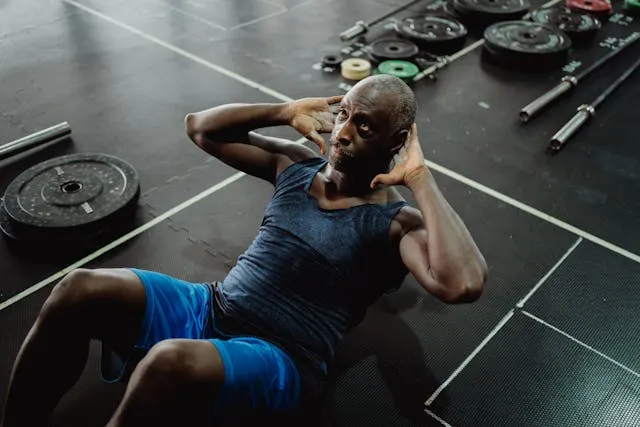
Core should be included in every workout - typically at the end, but you can do it anytime.
I typically go 3 rounds to failure in one of the following exercises:
- Leg Raises
- Captains Chairs
- Plank Holds
- Cable Crunches
- Decline Sit Ups

What About Stretching?
As someone who used to do yoga all the time, and even got my 200 hour yoga teacher certification, I’ll say that stretching has all kinds of benefits.
The more you do them, the more flexible you get. The hard part is staying consistent.
When it comes to stretching before lifting, I don’t do very much. On leg days, I do hip openers and leg swings before squatting.
If it’s a lifting day for you, I wouldn’t do more than 10 minutes of stretching before getting started.
If you’re stretching after your workout as part of your recovery, you can go longer.

What About Cardio?
Cardio is a big component that a lot of lifters neglect. This is a mistake. Your heart is a muscle, and it needs exercise like anything else.
Cardio also plays a role in losing fat.
When you exercise, your body primarily relies on glucose and glycogen (stored glucose) for quick energy.
As those glycogen stores become depleted, your body begins relying more heavily on fat for fuel.
For this reason, I prefer doing cardio at the end of my workout rather than at the beginning.
Five to ten minutes at the start of a session is fine for warming up, but excessive cardio before lifting can use up energy that would be better spent building muscle.
I typically do 10 to 20 minutes of cardio at the end of my lifting session, usually on the treadmill at low-medium intensity. You can go longer, but excessive cardio can interfere with recovery and muscle retention.
As for the cardio machines, I like the treadmill. Rowing machines are a killer workout. Stairmasters are brutal and wear me down quickly, so I avoid them. I’m not a fan of the stationary bike or elliptical machines.
Pick a machine that works for you - or better yet, go running outside, ride your bike, or swim in the pool. Real activity is more rewarding than using a machine in front of a row of television screens.

What About Nutrition?
How you eat is just as important as exercise. You can’t out-train a bad diet.
If you’re just getting started and wondering if you should focus more on exercise or diet, choose exercise.
Your appetite and food preference changes after you’ve been working out awhile.
Get used to working out consistently for a several weeks, and then start dialing in your diet.
You don’t need to be tracking macros and calories at this point. You just need to be getting to the gym consistently.
If you have a poor diet, and don’t know where to start, the easiest way to begin is to cut liquid calories.
No soda, juice, beer, or anything of that nature. Just drink water. Black coffee and tea are also acceptable.
Aside from that, stick to simple, unprocessed foods: meat, vegetables, potatoes, rice, etc. Eat the things you know are good for you. Try to reduce or eliminate unhealthy processed foods.
We are going to cover nutrition in greater detail in future articles.
What About Supplements?
I just finished telling you to hold off on fixing your nutrition until you have your workouts established, and now you have the nerve to ask about supplements?
Let’s be honest: You do not need supplements.
The fitness industry has a ton of products designed to separate you from your money: protein powders, creatine, branched-chain amino acids (BCAAs), pre-workout mixes, vitamins, hydration supplements, peptides, testosterone boosters. The list goes on.
Do they work?
Some yes, others no.
But do you need them?
Not at this stage.
Get your workouts on point first. That’s the hardest part. Then fix your nutrition. Most of these supplements are unnecessary if you just eat right.
Then, and only then, does it make sense to start looking into supplements.
We’ll also cover this in future articles.

What About Rest?
Okay, this one is super important. The way your muscles grow is by breaking them down with exercise, and then letting them heal.
By splitting up our workouts throughout the week, we are breaking down certain muscle groups, while allowing others to recover.
Getting proper rest is paramount to a healthy lifestyle. Staying up all night gaming, watching Netflix, or doomscrolling is going to interfere with your recovery.
Resting between sets is also important.
It’s too easy to get distracted on your phone or chatting with other people at the gym, so time your rest between sets. Otherwise, your workouts are not going to be as effective.
A general rule I use:
- 1 minute between sets for most exercises
- 90 seconds for heavy and taxing exercises like squats and pullups
- Deadlifts require even longer rest periods.
Some Helpful Tips
- If you are just starting out, you are going to be sore - a lot.
It’s going to take a couple months for your body to adjust to your new lifestyle.
It’s why rest is so important.
Don’t worry, you’ll adapt, and your energy levels will return. - Keep track of your workouts.
A lot of people use apps on their phone.
I have a physical journal that I bring with me to the gym.
I record the exercises, the number of sets and reps, and the settings on machines.
Whenever I return, I’m not racking my brain trying to remember what I did last week or where to adjust the pads or seat to where I was feeling comfortable. - Most people tend to make progress quickly when starting out, but then their progress stalls.
They hit a plateau.
That’s normal.
You don’t have to add more weight to your lifts with each session.
I’ve often found myself stalled at the same weight for months, even years on some of my lifts.
It doesn’t matter. I’m still being challenged. - Be prepared to work for months without any noticeable change.
You’ll get some newbie gains in the first couple of months. Then it will feel like you aren’t getting anything, but if you stick with it, the gains will come.
Being consistent in your efforts is key. You just have to be patient. - Do NOT get distracted by novelty.
You start one program, get bored, see something on Instagram, change your program, and then it happens again next week.
Don’t follow that cycle.
Get your program locked in, and then stick with it.
Unless something is extremely out of place, I wouldn’t abruptly change my program.
You can tweak things as time goes on, but when you’re just starting out, it’s easy to find yourself being pulled in multiple directions.
Pick ONE and follow it. - Find the right balance.
Sometimes you find yourself sleepwalking through your workout, going through the motions, and just trying to get it done.
Doing that is only slightly better than doing nothing.
Other people go hard. They go all-in day after day, wearing their bodies down, setting themselves up for burnout and injury.
Pick a level of intensity that challenges you and pushes you past your limits, but one that you can also do consistently from now on. - I mentioned this in every previous article in the series and I’ll mention it again here: Proper form is better than lifting heavy weight.
Start small, focus on doing the exercise correctly, and work your way up from there.
Training to failure does not mean you collapse on the ground, it’s when your form begins to suffer.

Are You Still Confused? Just Do This!
I’ve thrown a lot of information at you recently. This entire series of articles may have left you feeling overwhelmed and not sure of what to do.
Don’t worry. This is perfectly normal when getting started out.
The important thing is that you begin. You can make adjustments or modifications along the way.
- Train 3-4 times per week.
- Pick one of the workout splits listed above. My suggestion is Upper/Lower.
- Keep track of your workouts.
- Finish with 3 rounds of core exercises
- Add 10-20 minutes of cardio at the end.
- Get plenty of rest in between workouts.
- Drink lots of water, and make an effort to eat healthier. Lean meats and vegetables are always a great option.
That’s it.
If you just follow that simple advice, you’ll be well on the path towards building muscle, better health, losing weight, and looking better.
Don’t feel bad if you miss a workout, or multiple workouts. Just start again and keep it moving.
Don’t give up.
I hope these past articles have been helpful, and provided value in your life.
Getting started with fitness always starts as confusing and overwhelming, and it’s easy to get discouraged.
Find the strength to get past your mental roadblocks. It’s easier than it looks. It just takes time, effort and consistency.
If you enjoyed this article, bookmark this page and remember to Subscribe.
If you’d like personalized guidance on training, consistency, and building a sustainable routine, I offer 1-on-1 coaching. Feel free to reach out.
Check out my Substack:
And follow me on socials:
Facebook
Twitter
Instagram
Youtube
Thanks for reading.
God Bless.
Member discussion