Egypt Isn't a Vacation - It's a Mission
Egypt is going to test you - especially if you’re an inexperienced traveler.
It isn’t the worst, but compared to other popular destinations, Egypt has more challenges than most.
This isn’t where you come for rest and relaxation. It’s a once-in-a-lifetime destination with over 3000 years of history and home to one of the oldest civilizations on earth.
Let’s walk through the places I visited, what I saw, and the challenges I faced.
By the end of it, you’ll understand the slogan I gave this country:
Egypt isn’t a vacation - it’s a mission.
Cairo
The first stop for anyone flying into the country.
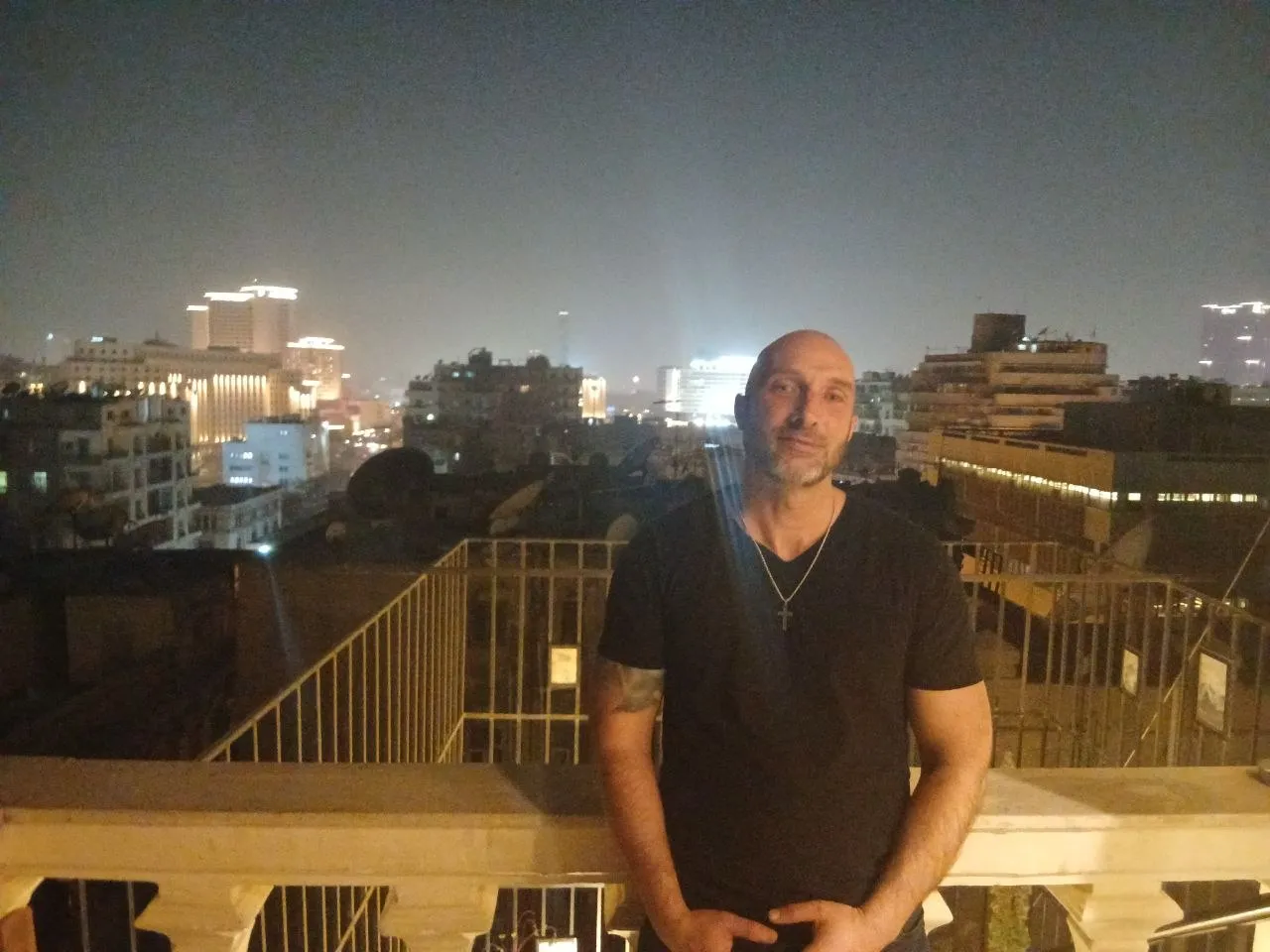
It’s crowded, chaotic, loud, and polluted. Just getting from the airport to my hostel was a challenge.
You match with a driver on Uber, and they message you asking to pay cash at a much higher rate than the app shows.
This is a bad idea, so I request another driver - same thing. By the third driver, I bite the bullet and overpay for my ride.
Thankfully, the airport is the only place that this routinely happens. Everywhere else I managed to get a ride with the normal fare.
I got to my hostel in downtown Cairo. The building is rundown, but the interior is a little better.
I spent my first two days in Cairo at the dentist.
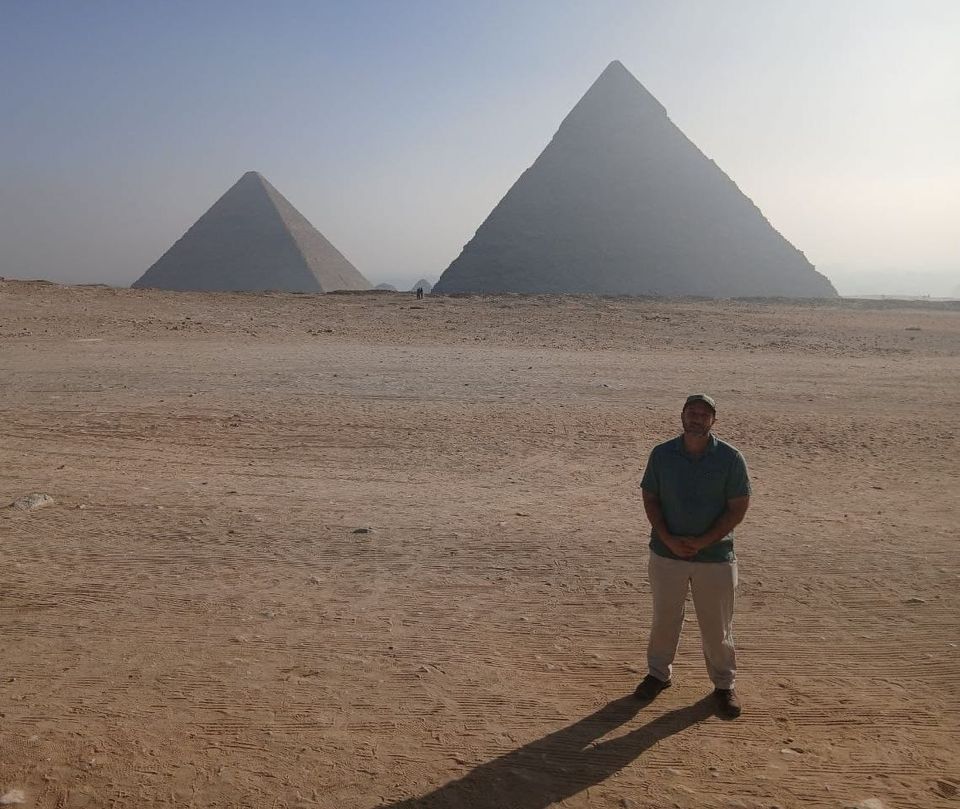
My third day, I went to the pyramids. I was expecting to walk into a predatory tourist trap full of scammers who wouldn’t leave me alone.
Thankfully that wasn’t my experience.
Yes, people will try to sell you camel rides, horseback rides, and souvenirs - and they can be very persistent.
Others will offer to take a photo for you, or show you around. They’ll demand payment afterwards if you accept. Don’t fall for it.
Learn how to say “No”, and your entire trip will go much smoother.
The pyramids live up to the hype. I had a great time, and it’s an obvious must when you visit Egypt.
I also paid extra to access some of the passages inside the pyramids. It’s worth the extra money to walk and crawl through these ancient tunnels, even with the lineup.
Food and drinks at the pyramids are pricier, but not crazy expensive.
Giza is about 1.5 hours from downtown Cairo, so if you’re taking an Uber, request a car instead of a scooter.
On my last day in the city, I decided to go to Coptic Cairo and see the historic Christian churches.
Coptic Orthodoxy is different from the Eastern Orthodoxy I follow. Our beliefs don’t fully line up, and their icons and traditions are distinct.
One church had been carved into a cave. It was massive and impressive.
However, to get there, I had to pass through an area of town known as ‘Garbage City’ - a notorious slum where residents run a massive scavenging and recycling operation.
The area smelled awful, and I was worried about my safety, but nothing bad happened.
In fact, a local noticed I was on edge and approached me.
He showed me a translated message on his phone that read “Hey, you don’t need to worry here. This is a Christian neighborhood. You are safe. If you want, we can help you find a taxi.”
Such a wonderful guy. I thanked him and told him I was waiting for my Uber, which arrived shortly after.
If there’s on thing I missed in Cairo, its the museums.
There’s the Egyptian Museum in downtown Cairo and The Grand Egyptian Museum right next to the pyramids - each with their own charm.
The Grand Egyptian Museum is massive and takes most of the day to explore.
I guess it will have to wait until next time.
Luxor
I’m not going to lie - Luxor is tourist hell.
You can’t walk anywhere near the main areas without constant harassment from the locals trying to sell you something: souvenirs, taxis, food, tours - you name it.
My least favorite are the guys selling carriage rides on severely malnourished horses.
“Come take a ride in my Ferrari!” they’ll say…because the Ferrari logo is a horse - get it?
This is where I learned my biggest lesson in Egypt - agree on pricing upfront so you don’t get screwed.
I stopped for lunch at an outdoor restaurant. The waiter handed me a menu, I ordered, and he offered hummus and baba ganoush. I accepted—then my bill came out at three times what I expected.
Those items were not on the menu. He just overcharged me because he could.
From then on, I asked for prices before ordering anything.
Luxor’s main attractions can be done in a couple of days.
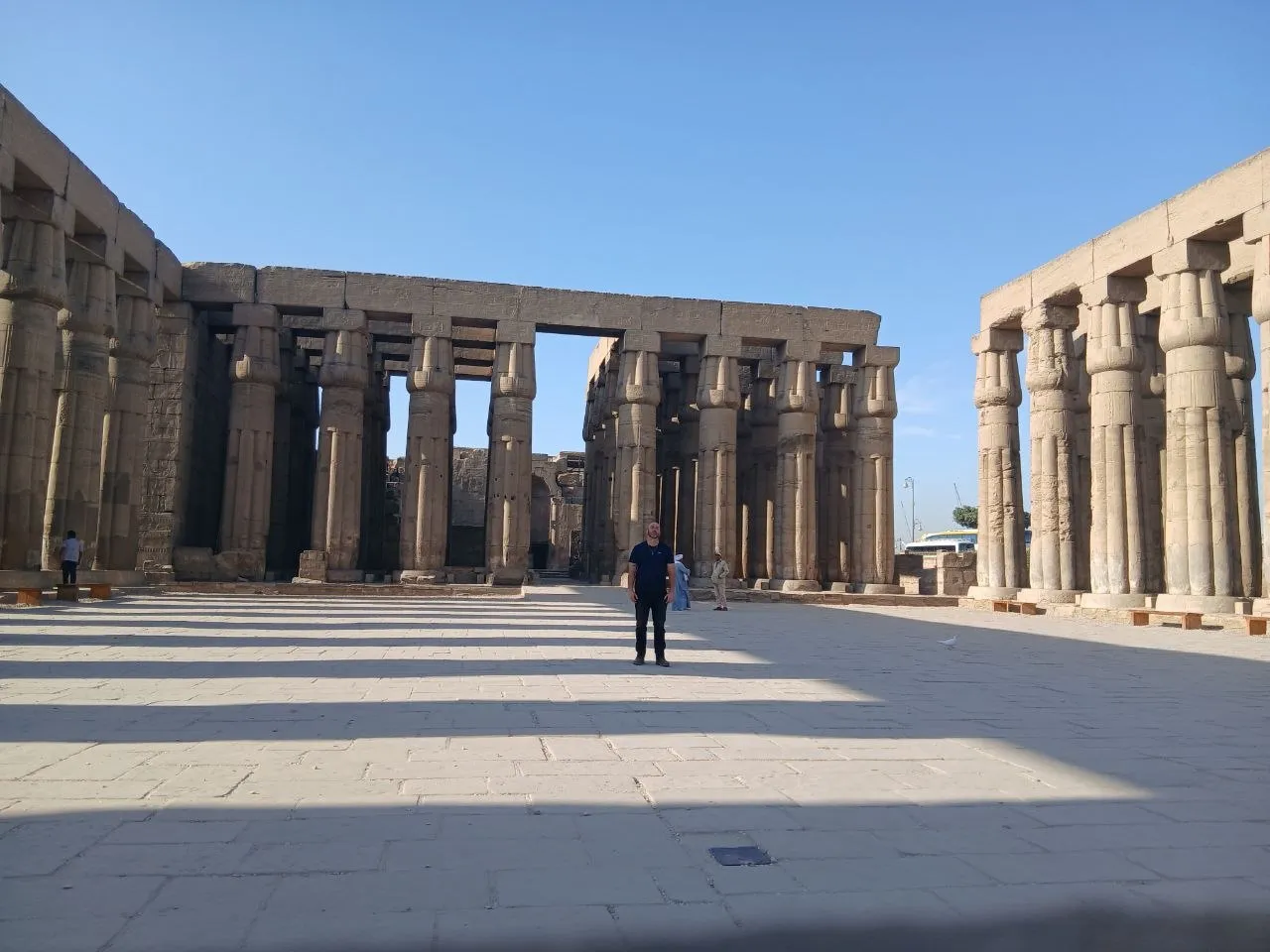
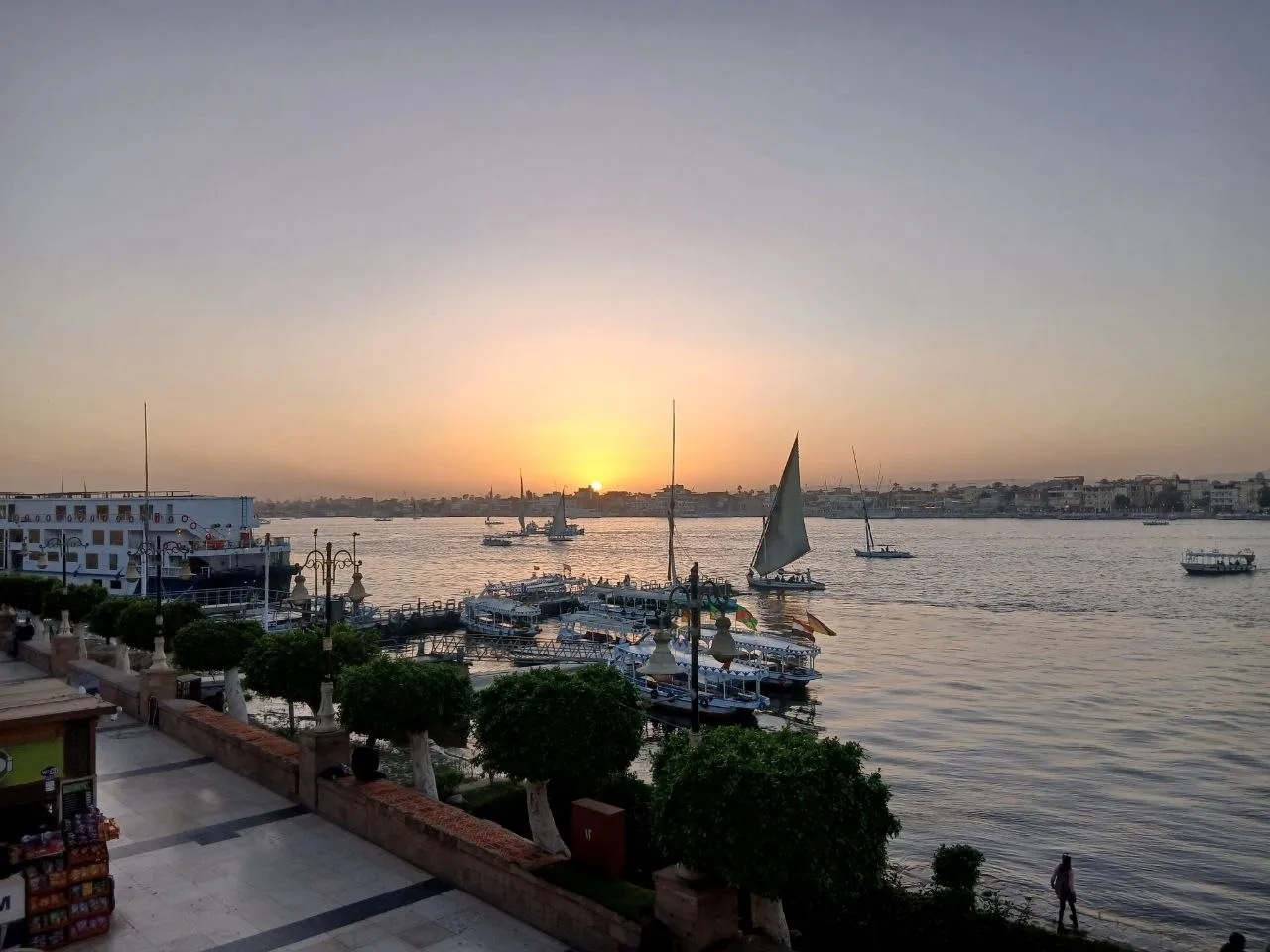
Spend one day exploring Luxor Temple and Karnak on the east side of the Nile.
There’s a 5 km statue-lined path, the Avenue of the Sphinxes, connecting the two sites. It’s an excellent path to walk - even in the heat.
The west side of the Nile has three main sites: Valley of the Kings, Valley of the Queens, and Hatshepsut Temple. To get to all these places, expect to overpay for taxis.
Time your visits right, and you’ll avoid the crowds.
Luxor has a couple of museums.
The Luxor Museum has some interesting pieces and a couple of mummies. It’s small, but not bad if you want to kill an hour.
The Mummification Museum barely fills a room and takes less than 20 minutes. I didn’t learn anything new. It’s a waste of time. Save your money.
I also took a hot air balloon ride. It’s not necessary, but if it’s on your list, this is a good place to do it.
Luxor isn’t a place you want to linger. See it in two days, then get out.
Aswan
Aswan was a refreshing stop after Luxor.
It’s much more laid back. There’s a long waterfront, and my hostel was right on the Nile - a great place for swimming.
I didn’t get as much time to explore as I wanted. I was there for two days.
One day was spent relaxing with friends I met along the way.
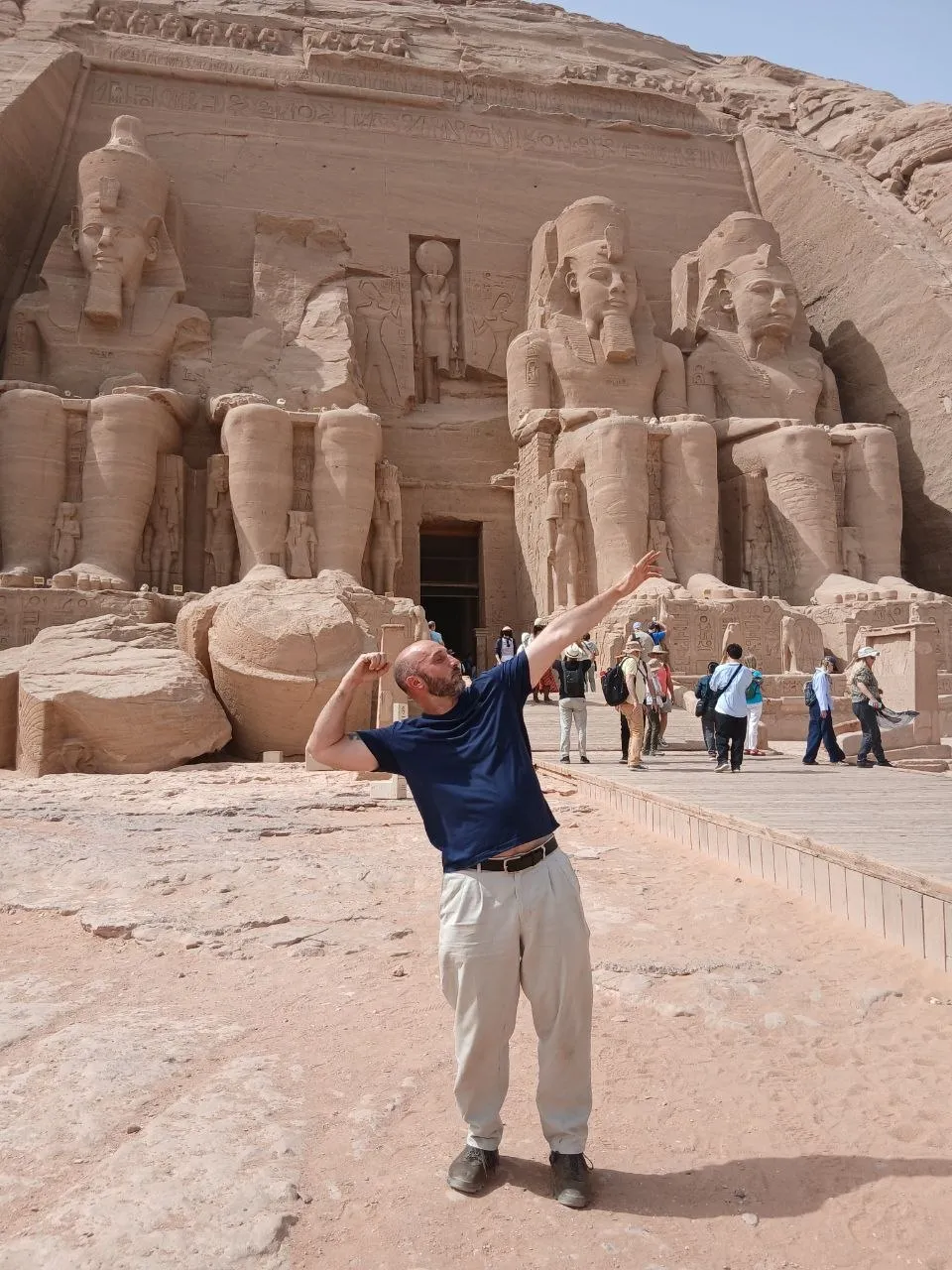
On my second day, we went to Abu Simbel.
Abu Simbel is a trek - about a 3-hour bus ride, but it’s worth it.
This was my favorite site after the pyramids.
The temples have massive statues and extensive hieroglyphics. I almost skipped coming here, but I’m glad I didn’t.
If I went back, I’d spend more time exploring the town and nearby islands.
There’s a site called the Unfinished Obelisk, where workers spent decades carving a massive obelisk before abandoning it when a crack appeared.
If you’re coming from Cairo and Luxor, you’ll really appreciate Aswan.
Dahab
If Aswan took some of the pressure off, Dahab is where you can completely relax.
It took me a while to get there. I flew from Aswan to Cairo to Sharm el-Sheikh, then I used inDrive for the rest of the trip, passing a couple of security checkpoints. Once I got there, it was worth it.
This place is right on the Red Sea. It’s famous for snorkelling and scuba diving.
My hostel was $7 a night for a tent set up on a rooftop.
I met people living there long-term, and others thinking about moving.
The waterfront is lined with excellent restaurants, shops, tour guides, and diving centers.
It’s definitely built around tourism. English was widely used, and prices were clearly listed.
The level of harassment is a fraction of what I experienced in Luxor.
I wanted to scuba dive, but I had dental surgery in Cairo and was advised against it.
I did some swimming, but wish I spent more time in the water.
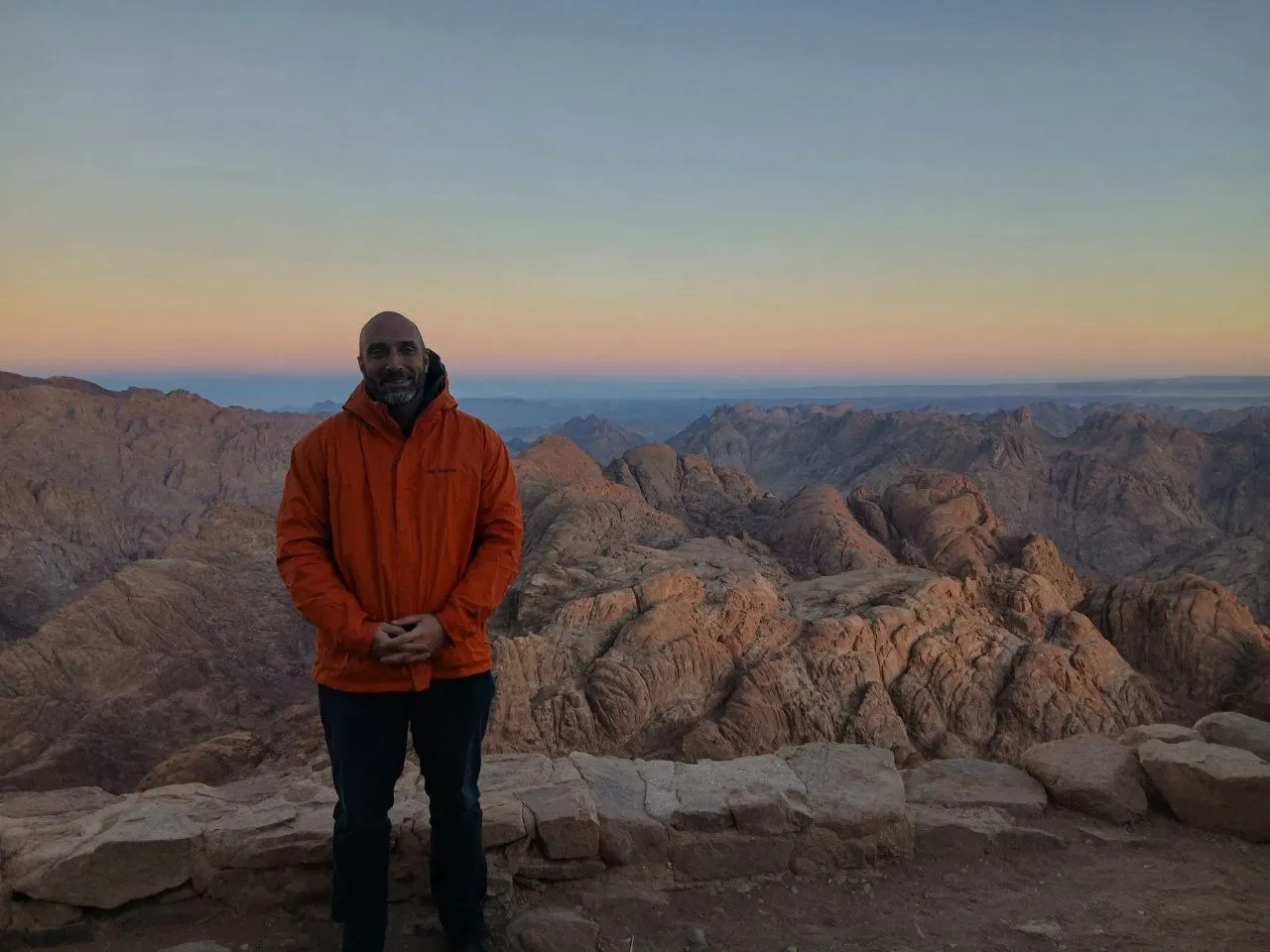
The main reason I came was to climb Mount Sinai and visit Saint Catherine’s Monastery.
This was an excellent experience. I got to climb the same mountain believed to be where Moses received the 10 Commandments, and briefly visit the oldest continually running monastery on Earth.
They had icons dating back to the 700s.
The hardest part of it was the sleep deprivation. My ride picked me up in the evening, and we rode a few hours. The climb didn’t even begin until it was almost midnight.
From there, it was about four or five hours of walking uphill. You don’t need to be in top shape, but if your fitness is below average, its going to be rough.
The idea is to reach the top of the mountain for sunrise. I got there about an hour and a half early, so I waited in the cold.
It’s cold at the top, but nothing like Canada in February.
Vendors on top of the mountain rent out blankets to keep warm. They asked me a few times, but I kept telling them, “No thanks, I’m Canadian.”
The sun comes up, we take some photos, and start our descent.
It’s cold at the top of the mountain, and I brought clothes to layer up. However, once I started going down, it didn’t take long to heat up.
At the base, after a short wait, we entered the chapel area of the monastery. It’s only open to tourists for a couple of hours in the morning.
This was the most impactful part of the trip for me as an Orthodox Christian. It’s too bad they don’t allow photography in the chapel, but I understand.
If I went back, I’d spend more time in Saint Catherine’s instead of just passing through.
Dahab was my favorite place in Egypt. It’s great for both relaxation and adventure, plus I met some amazing people there.
Siwa Oasis
My last stop was in the far west of Egypt, near Libya - a desert oasis in the Sahara.
When I was planning the trip, I thought this would be the place to relax, but Dahab was better for that.
Don’t get me wrong, Siwa is an awesome place to visit. However, there’s no airport, so you’ll need to take an overnight bus.
Once you’re there, there’s only a handful of things to do - a couple historical sites, Cleopatra’s Hole, some salt pools, and that’s it.
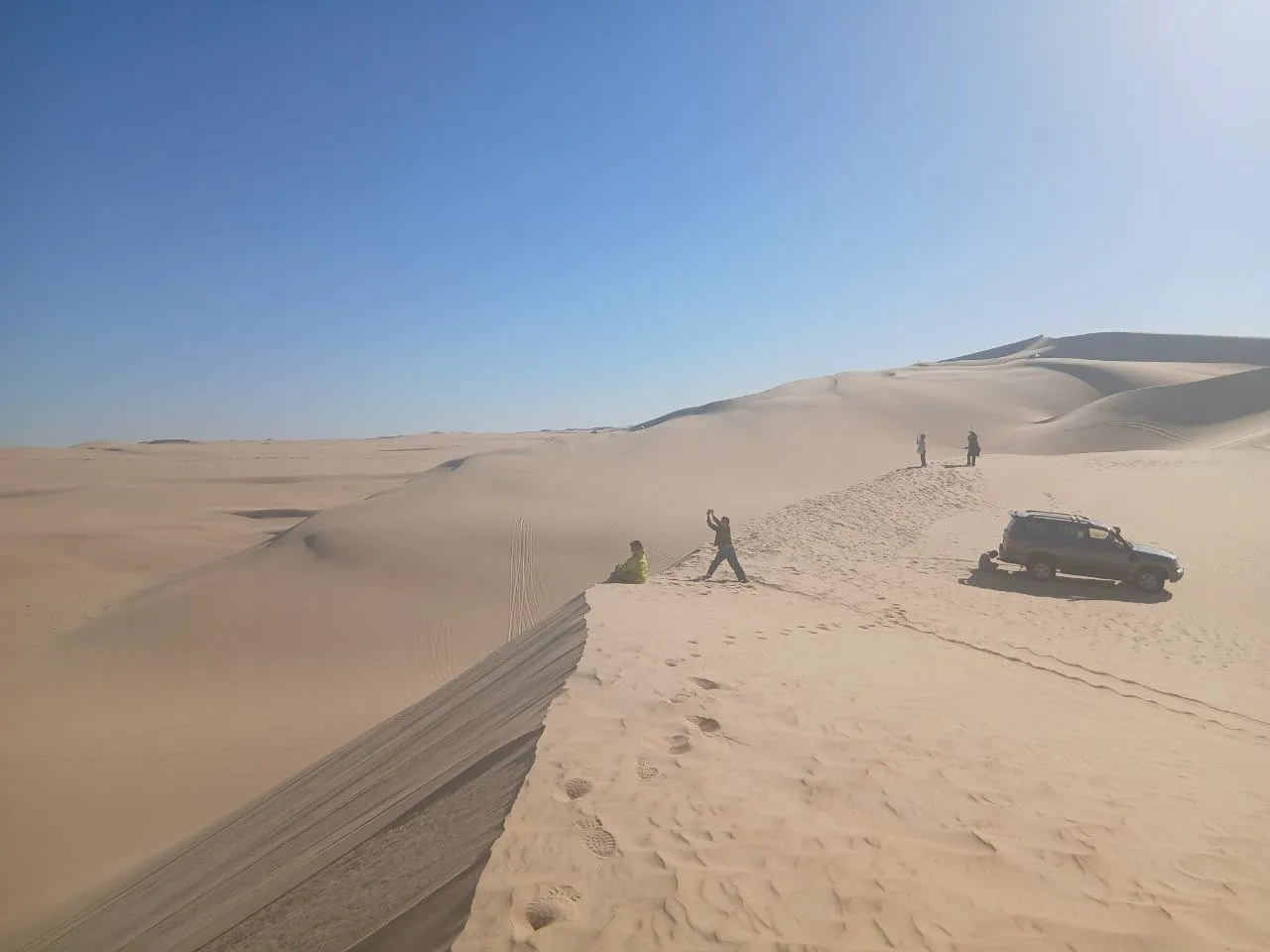
The highlight for me was a Sahara desert excursion in a 4x4.
A driver picked us up, and we headed into the desert, bombing up, down, and over sand dunes.
It was like being on a roller coaster.
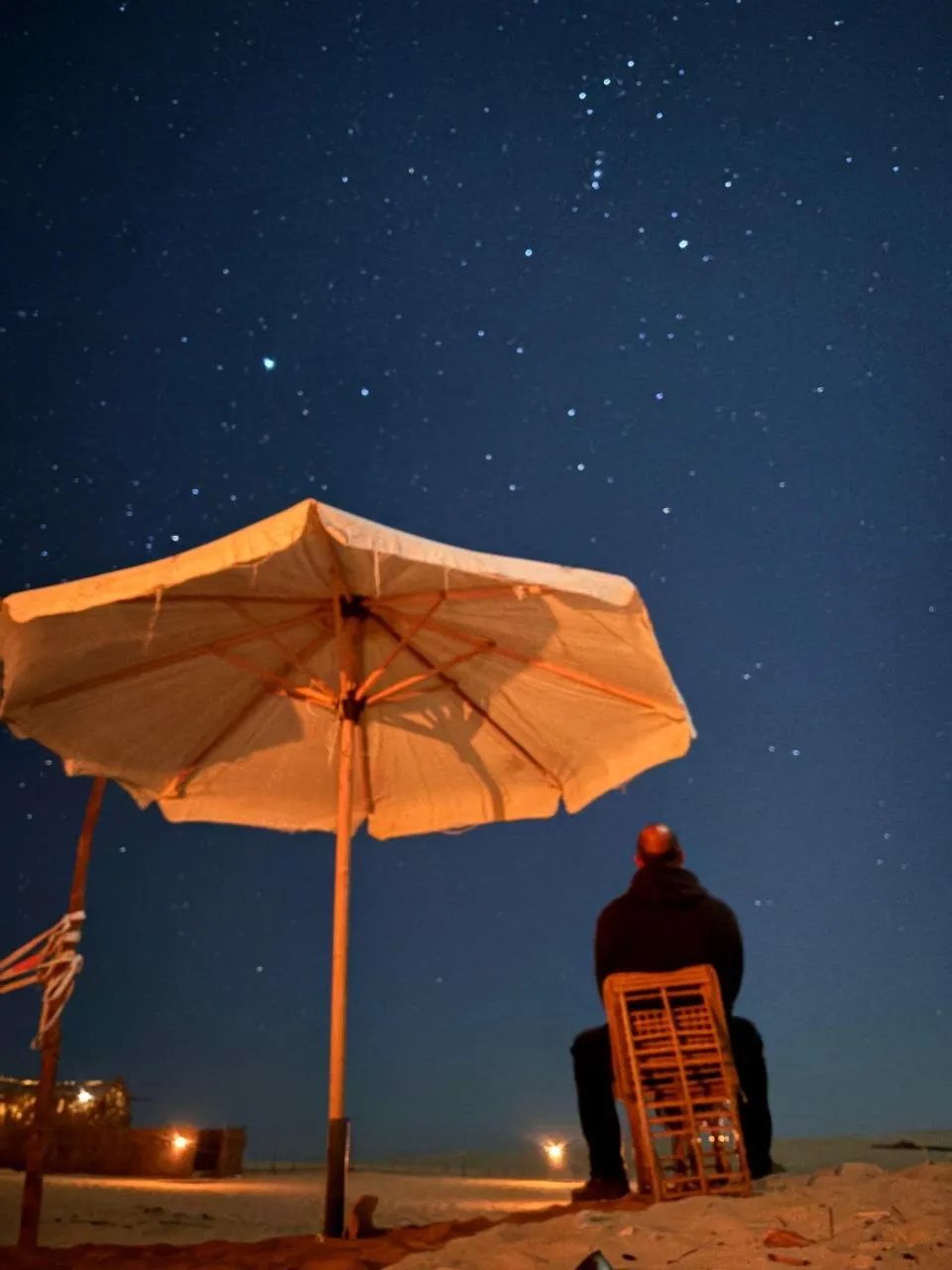
We did some sandboarding, then stopped for dinner at a desert camp with a great view of the night sky before heading back.
My accommodation here was also interesting.
While planning the trip, I found Siwa Palace Eco Lodge on Google Maps and wanted to stay there.
Once I started traveling, other travelers recommended a hostel called Siwa Oracle.
I couldn’t decide, so I booked two nights at Siwa Oracle and two at Siwa Palace.
Siwa Oracle was the better option, mainly because of the location and the people.
If you’re traveling solo, hostels are the way to go. You meet people, hang out, and exchange stories and information.
Siwa Oracle was just outside the main part of town - less than 10 minutes to the main road. Siwa Palace was a 30-minute walk down an empty road, so you needed a taxi to get anywhere quickly.
I think I was the only guest there. I chatted with the owner and staff occasionally, but was mostly on my own.
That said, Siwa is still worth visiting. It’s just much slower than anywhere else I went.
Final Thoughts
Egypt is a great place to visit, but it isn’t easy for beginner travelers. It’s not hostile, but it can be frustrating and inconvenient.
If you’re thinking of visiting the country, here are my tips:
- Costs - Prices in Egypt are very cheap, especially outside of tourist zones. Your trip to Egypt doesn’t have to cost a fortune.
- Haggling - Bargaining is a big part of the culture. This can be frustrating for Canadians and other westerners who aren’t used to this sort of thing. However, I met an American in Luxor who explained it to me like this:
Egypt sits at the crossroads between Africa, Asia, and Europe. A lot of trade has moved through this country for centuries. The number one advantage Egyptians have is that they know the prices of everything while the rest of us remain ignorant.
Once I understood this concept, the haggling didn’t bother me as much. - People - Egyptians are very friendly people when they aren’t trying to sell you something. I met some great people and had some wonderful conversations while I was there. Don’t let the pushy “my friend, habibi” routine convince you that everyone is like that.
The best strategy for pushy salesmen is to ignore them. If you engage, it gives them consent to weasel their way into your wallet. If you’re not interested, just ignore them and keep walking. - Advice - Talk to hotel and hostel staff. In every place I stayed, an employee or owner helped me out in some way - whether I was planning logistics, understanding local prices, looking for good restaurants, or booking a hot air balloon ride. I saved myself a lot of trouble just by asking.
- Tour Groups - You don’t need guides or tour groups for the most part. I got into the pyramids, Abu Simbel, and all the Luxor sites by purchasing tickets at the gate. My hot air balloon ride was booked a day in advance. I used tour operators for Mount Sinai and the Sahara excursion because those require permits.
- Getting Around - In Cairo, I used Uber to get around the city. There is a subway, but Uber rides were cheap and convenient. However, there is almost no Uber outside of the capital. I used an app called inDrive that matched me with a driver. I would negotiate a price over text and pay with cash.
- Traffic - Speaking of driving, there are no traffic rules. Whoever paints lines on the road for a living has the most useless job in the country. People drive six lanes across a four lane road, no headlights, cutting in and out of traffic, going in the opposite direction as the rest of the traffic, while honking their horn the entire time. It takes a while to get used to it.
- Currency - You don’t need to change a lot of cash at once. When I got to the airport, I decided to change $200 USD to Egyptian Pounds. The stack was an inch thick, barely fit in my wallet, and lasted several days. The exchange rates at the airport, banks, and exchanges were fair.
- Safety - Egypt was safer than I thought it would be. Don’t get me wrong, there’s a lot of petty scamming going on, but at no point did I feel unsafe. I was never worried about violence, and over time I became less concerned about theft. Most of the scamming comes from being overcharged or caught up in tourist zones, and even there I was mostly being taken for a few dollars.
- Religion - Egypt is 90% Sunni Muslim. The other 10% are mostly Coptic Christian. I had both Muslims and Christians assure me that both groups have been living in peace for a long time, and that I didn’t need to worry about religious persecution. I was wearing a cross pendant, and they said that was okay.
Ramadan started about halfway into my trip. During this time, the whole vibe changed. The streets got quieter. Several shops and restaurants were closed. As a tourist, it got a bit harder finding places to eat, but Egypt is used to visiting foreigners who don’t share their beliefs. Things tended to liven up after it got dark.
I did my best to be respectful. It’s considered rude to eat in front of people who are fasting, so I didn’t eat in public. Prayer mats were sometimes left on the sidewalk, so I did my best not to walk on them. - Attire - Be sure to dress appropriately. Egypt, being a desert country, is hot during the day, and cold at night. It’s also a conservative country with a high Muslim population, so it helps to dress modestly. I wore long pants every day without getting too uncomfortable. Short sleeves were fine during the day, with a long sleeve layer once the sun went down. Try to blend in, even if you don’t look Egyptian, and don’t flash expensive jewelry or anything else that might make you a target.
- Women - While I can’t speak directly on the female experience traveling around Egypt, I met a few women who complained about getting harassed by local men. Most of the Egyptian women wore hair coverings. Some covered their faces. Few women, aside from tourists, were out in public without some kind of covering, but there were some.
- Sanitation - Littering is common all over Egypt with the areas around Dahab and Sharm al Shaikh being the exception. I felt like I took better care of the country than the locals just by holding on to my trash until I could find a bin.
- Animals - Stray cats and dogs are everywhere. You might feel bad and want to feed them, but if you do, they won’t leave you alone and will get 10x more aggressive. You have been warned.
- Drinking - Alcohol, while legal, isn’t a big part of the culture in Egypt. Dahab was the only place where I saw liquor stores. Most restaurants, if they served alcoholic drinks, didn’t have them on the menu. If I wanted a beer, I had to ask around to find a place.
- Tobacco - Smoking, however, is a big part of Egyptian culture. One of the top activities in Cairo is to sit at a cafe with a hookah smoking shisha and a cup of tea or coffee. Cigarettes cost $2 a pack and you can smoke indoors in most places.
- Food - The food in Egypt was good, but not great. I had some amazing meals, and a few disappointing ones.
Their specialty dishes include stuffed pigeon, koshary, and kofta. These were all delicious.
However, I also ordered a chicken sandwich, and they gave me chicken fingers on a hot dog bun.
Their coffee was excellent. I really liked visiting their cafes. They also had this pineapple soda called Fayrouz, which I really enjoyed.
Dates, spices, and olive oil are widely produced and great edible souvenirs to bring home. - Language - I managed to travel three weeks in Egypt using only three words of Arabic: shukran means thank you, salaam means hello, and habibi means friend.
Everything else about their language remains a mystery to me.
I used shukran a lot. It’s important to be polite when you’re a guest in another country. It definitely helps to learn a little Arabic, but you’ll be fine without it.
Not everybody spoke English, but there was usually someone around who could.
When it comes to reading signs and menus, use Google translate. You can point the camera, and instantly translate any writing you’re looking at. - Cell Phones - One of the best purchases I made upon entering the country was a local SIM card. For about $15, I got an Egyptian phone plan with 48GB of data, which was more than enough for my trip. You can buy eSIM cards online, but I got a physical one. It’s a must if you plan to use Uber, inDrive, or look anything up on the go.
Overall, Egypt is an incredible place to visit if you learn a bit beforehand and keep your expectations in check.
This isn’t a place to lay back and relax. It’s where you come to immerse yourself in history and ancient civilizations.
You are going to be shocked, worn down, harassed, and inconvenienced on an almost daily basis, but if you know how to handle yourself, you'll come out of it on top.
Just remember this motto: Egypt isn’t a vacation, it’s a mission.
Thanks for reading.
God Bless.
Member discussion